Enterprise Software
POR (Project Operational Reporting Tool)
POV transformed a difficult PowerPoint-based reporting process into a centralized tool for tracking projects, documenting changes, and presenting current information to leadership.
Service
Product Design
Industry
Enterprise Software
Year
2023

Overview
POR was an internal enterprise product designed for FM Approvals to replace a difficult PowerPoint-based project-reporting process with a centralized, real-time system.
The project was completed over two weeks, representing approximately 48 focused design hours and two major design iterations.
The Challenge
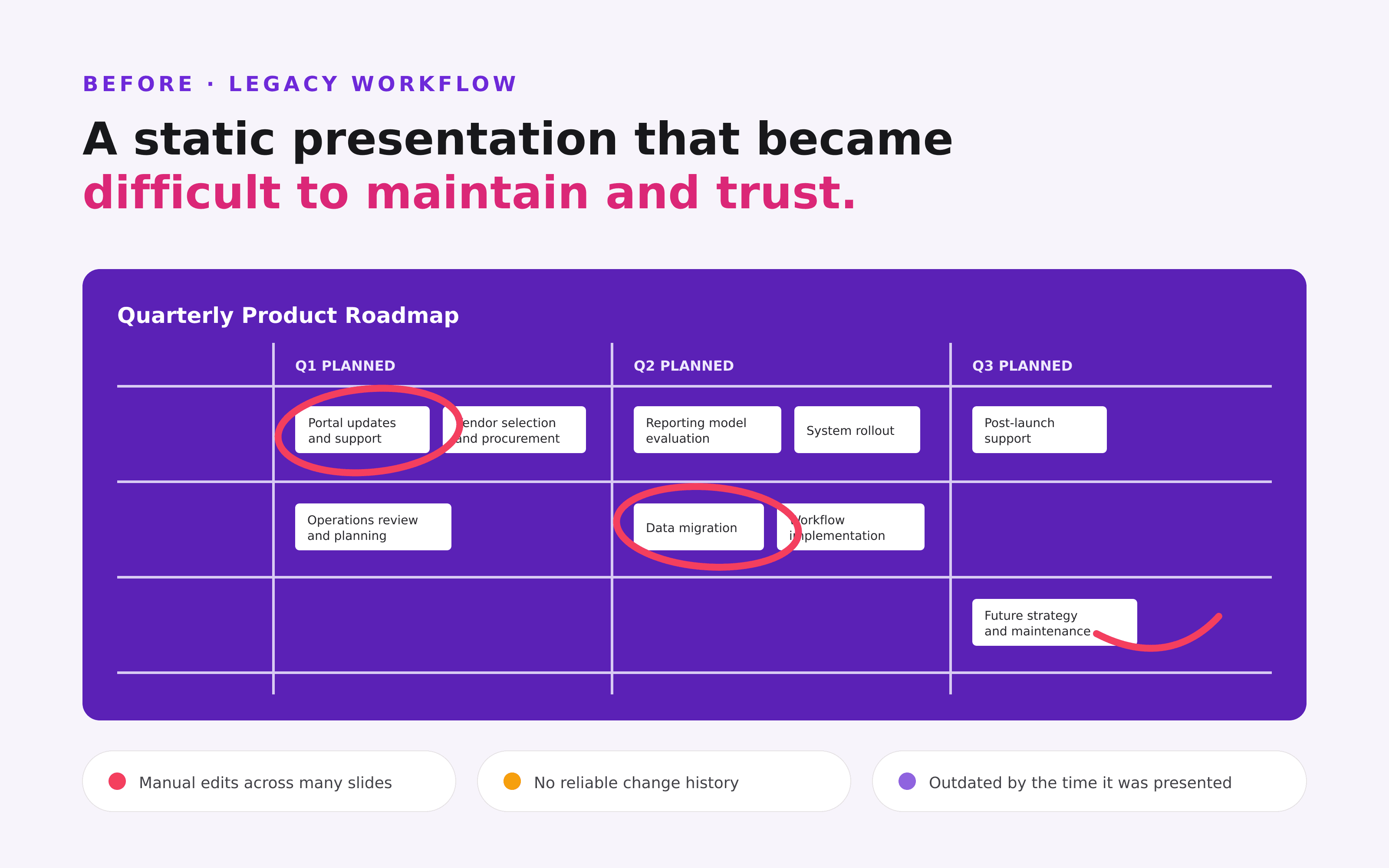
Project managers, technical project managers, and managers relied on manually maintained PowerPoint slides to track projects and report progress to leadership.
The process created several problems:
• Updating and editing slides was time-consuming.
• Teams lacked a reliable history of project changes.
• Information became outdated before leadership reviews.
• Metrics and status updates were not standardized.
• Leaders could not easily move from a portfolio overview into project-level details.
• Teams spent significant time rebuilding reports instead of managing the work itself.
My Role
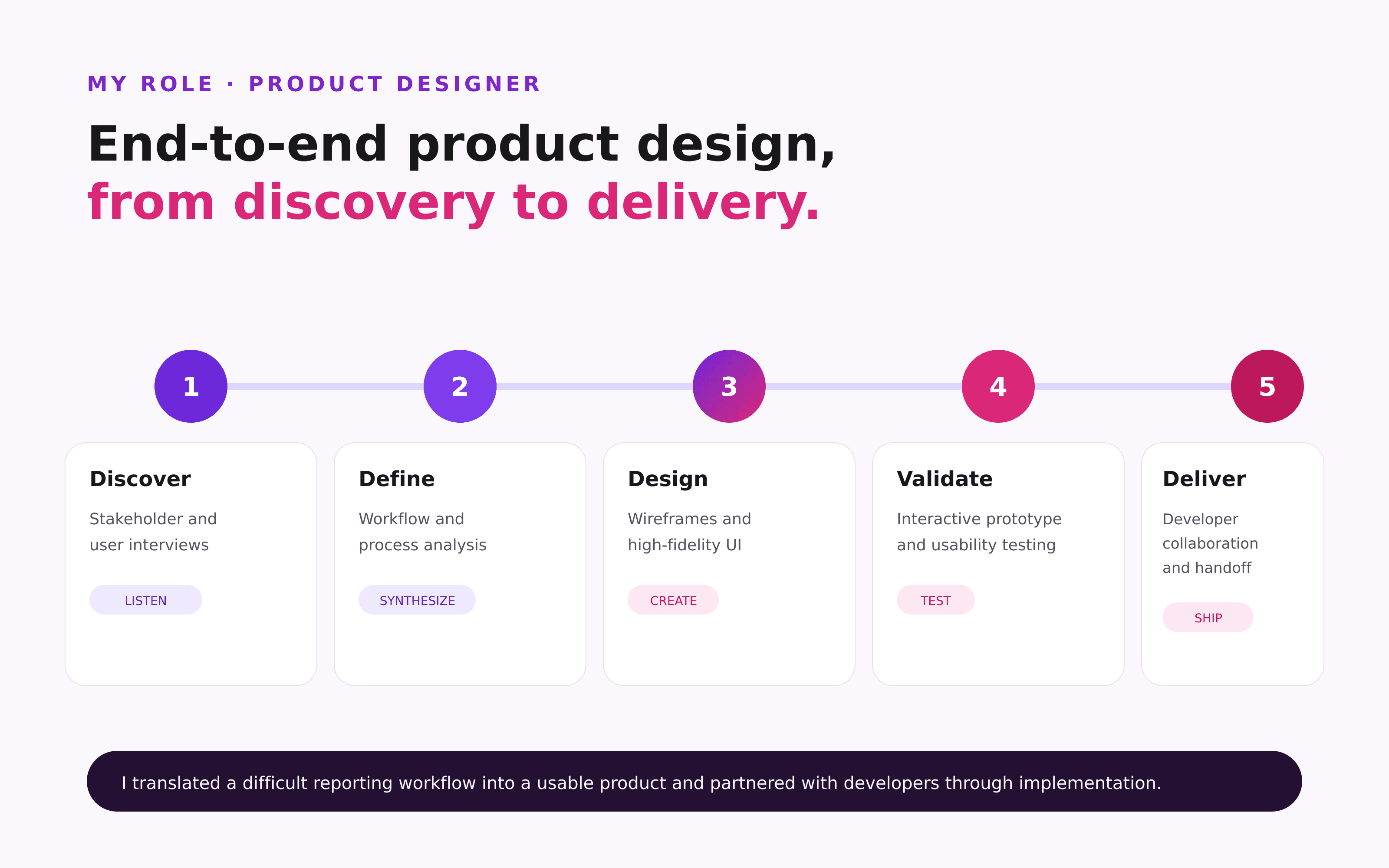
As the Product Designer, I worked across the complete design lifecycle:
• Stakeholder and user interviews
• Workflow and process analysis
• Wireframes
• High-fidelity interface design
• Interactive prototyping
• Usability testing
• Design handoff and developer collaboration
Research
I interviewed project managers, technical project managers, and managers to understand how they maintained project information, prepared weekly presentations, communicated changes, and reviewed progress with leadership.
I also examined the existing PowerPoint workflow to identify repetitive tasks, missing information, inconsistencies, and points where the process frequently broke down.
Key Findings
The research revealed that different users required different levels of information.
Project managers needed a fast way to update individual projects and document changes. Managers needed visibility into status, risks, dependencies, and required actions. Leadership needed a concise portfolio-level view without navigating through numerous slides.
Despite these different needs, everyone required the same thing: reliable, current information in one place.
Design Strategy
I designed a layered information experience that supported operational, portfolio, and executive views.
The solution included:
• A centralized list of projects and initiatives
• Consistent status indicators
• Standardized project and value metrics
• Clear risk and dependency visibility
• Project-level drill-down
• A structured history of changes
• Real-time information for leadership reviews
Wireframes and Prototyping
I began with wireframes that translated the existing reporting workflow into a structured digital experience. I then created an interactive prototype and high-fidelity designs to demonstrate how users could update information, monitor progress, and move between summary and detailed views.
Testing and Iteration
Usability testing showed that the first version contained too many features and made the most important information difficult to identify quickly.
For the second iteration, I simplified the information hierarchy, strengthened the risk and status indicators, and grouped related information more clearly. These changes made the experience easier to scan and reduced the effort required to understand project health.
Delivery and Launch
After the revised design received director approval, I collaborated with developers through handoff and implementation. POR was fully developed and launched internally in August 2023.
Outcome
POR replaced recurring PowerPoint-based reporting with a centralized system that supported real-time project tracking and more frequent updates.
The new experience created:
• Greater visibility into current project status
• A more reliable source of truth
• Less repetitive reporting work
• Faster and more informed leadership reviews
• An estimated potential saving of more than 1,000 reporting hours annually across teams
Confidentiality Note
The interface shown in this case study has been recreated with anonymized, illustrative data to protect confidential company and project information.